Image: AI-generated
Every new tool has raised the bar for beginners. AI is no exception.
Pandora's box is open, and humanity has begun to abolish itself. Or not quite.
Hardly a day passes without a new study counting the jobs AI will cost, and most of them agree on who pays first: the young, at the very start of their careers. Researchers at Stanford found that employment of 22- to 25-year-olds in the most AI-exposed occupations fell by 13 percent relative to other jobs, while their experienced colleagues held steady. In Switzerland, the share of junior positions in job ads for AI-exposed occupations fell by 16 percent. The share of senior positions rose by 26.
Do these numbers survive a closer look? Only partly. The decline shows up in hiring, not in layoffs, and it is concentrated in a handful of fields. Count all young graduates in the US, and their unemployment has not risen significantly so far.
As I argued in the last part of this series, I do not expect fewer jobs on balance. They will not be the same jobs. The skills they need will shift, and the level expected on the first day will rise.
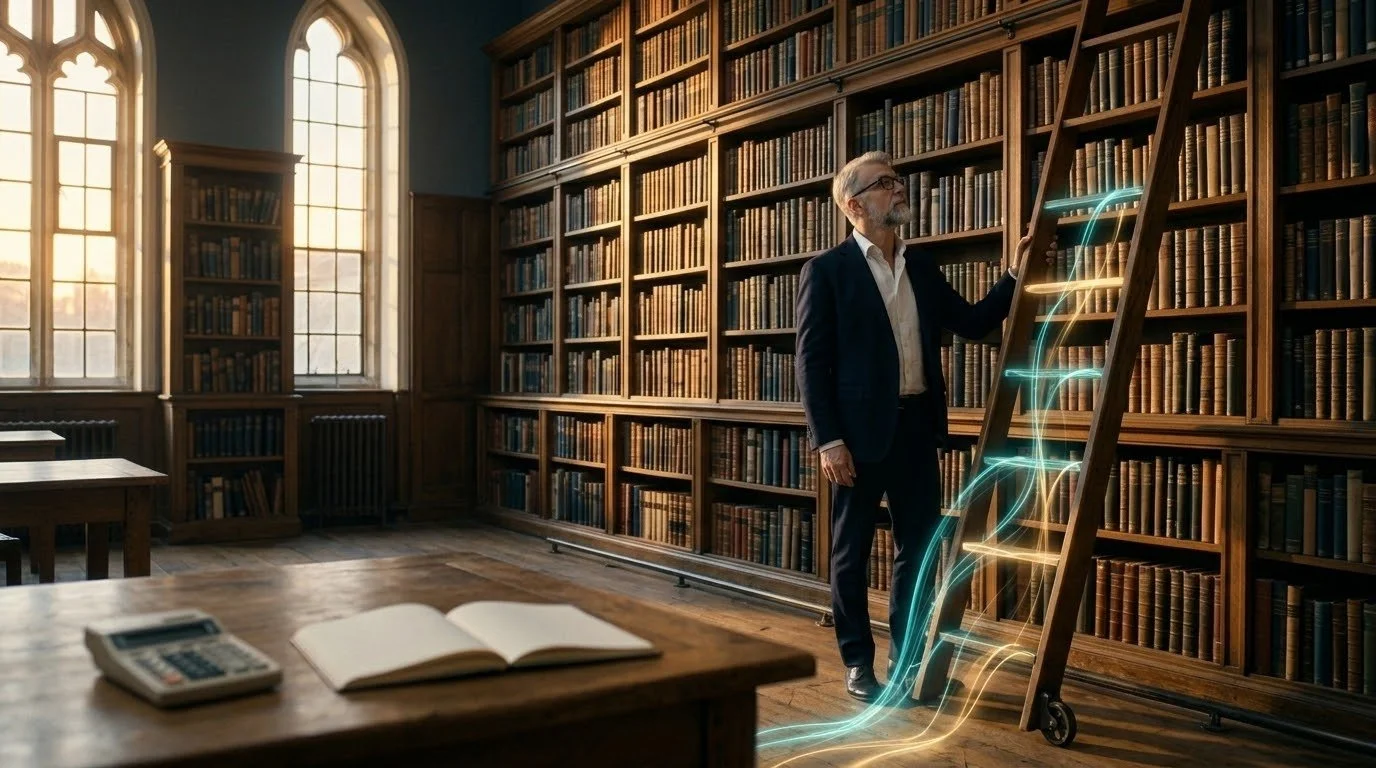
None of this is new. When pocket calculators reached the classroom in the 1970s, the verdict came quickly: if everyone uses a calculator, nobody will do mental arithmetic, and everybody will get dumber. As late as 1986, maths teachers picketed a meeting of the National Council of Teachers of Mathematics in Washington, because the council wanted calculators in every grade.
Compare what a maths class covers today with what it covered then, and the result runs the other way. Today's pupils work on more complex material, and the calculator is a large part of the reason. A pupil who no longer spends an hour working through a formula by hand has that hour for something else. For the teachers, the bar rose as well: they now have to get the concept and the logic across, not the procedure.
The new beginners
The same will happen now. AI will raise the level in schools and universities, and companies will expect more from the people they hire. The next generation of beginners will not start at a senior's level. But they will start above today's juniors, because using AI, questioning it and working with it will be part of their training from the first day. The first studies show how fast this can go: in a physics course at Harvard, students who learned with an AI tutor learned more, in less time, than those in an active-learning classroom.
"Temporarily" has a price, though, and the class graduating now pays it. They were trained for entry-level jobs that are thinning out, and they arrive before their schools have caught up. A company that stops hiring them to save money today will be short of seniors in ten years. In my trade, that is called a succession risk, and hardly anyone is booking it.
Hiring for a job nobody has done before
Companies will have to change as much as the people they hire. When the profile of a role can shift fundamentally within twelve to twenty-four months, hiring for experience stops making sense. Nobody on the market will have done the job for five years, because five years ago the job did not exist.
Skills become what the job market runs on. Whoever is curious and adaptable will take on the next challenge quickly. Whoever thinks in connections will add value wherever they land. What that means for job titles is the next part of this series.
This is where I see the real opportunity of AI. It will let people do things they only dream of today, and do new things again and again. Curiosity gets rewarded, and the thirst for knowledge finally has something to drink.
The catch
For too long, we taught our children to conform and to stick to the curriculum. Now they face a world in which creativity, or the lack of it, decides whether they succeed. We have to encourage pupils, apprentices and students to look for creative approaches and to enjoy constant change. And we have to do the same, all the more, for the generations already at work.
Whoever does not find their creativity again, and does not learn to enjoy change, will have a hard time.
Within ten years, the world of work will look fundamentally different. If we meet that change openly and with a creative mind, the future it leads to will be a better one. I can hardly wait. It's going to be a hell of a ride.
Part two of After the Agents, a series on what work looks like once agents take the tasks. It follows AI Replaces Tasks, Not Jobs.